Data management has become a strategic pillar for organizations seeking to scale their business intelligence, automate processes, and accelerate the adoption of artificial intelligence. Microsoft Fabric stands out as one of the most comprehensive and advanced platforms on the market and has been recognized as a Leader by Forrester in The Forrester Wave™: Data Fabric Platforms, Q4 2025, thanks to its unified architecture, future-oriented vision, and ability to integrate the entire data lifecycle.
Independent evaluations place Microsoft among the strongest data fabric providers, reinforcing its technological leadership and its strategy focused on AI, automation, and distributed data. At Bravent, as an official Microsoft partner, we see firsthand how these capabilities deliver direct value to companies seeking a modern and robust data platform.
What defines a modern data fabric platform today
A modern data fabric must provide a seamless experience throughout the entire data journey:
- Integrate heterogeneous data sources in a unified way.
- Manage structured, unstructured, and distributed data.
- Automate data quality, lineage, and governance processes.
- Democratize access through advanced analytics and self-service tools.
- Lay the foundation for generative AI and intelligent agents.
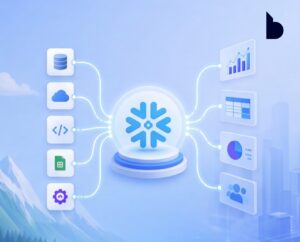
Microsoft Fabric brings all these elements together in a platform where each component works natively with the rest.
Why Microsoft leads in data fabric
Microsoft has been named a Leader in The Forrester Wave™: Data Fabric Platforms, Q4 2025. This recognition confirms its maturity and consistency in integration, governance, advanced analytics, and innovation capacity, consolidating its position as a reference provider in data fabric platforms.
End-to-end platform
Its ecosystem integrates:
- Data ingestion and integration
- Scalable storage and processing
- Advanced analytics and visualization with Power BI
- Centralized governance
- Native generative AI and automation capabilities
This significantly reduces complexity and eliminates dependencies on multiple vendors.
Governance and metadata
With Microsoft Purview and Fabric’s native capabilities, organizations benefit from:
- A unified data catalog
- End-to-end lineage
- Centralized metadata
- Security and regulatory compliance
Strategic vision
Microsoft is committed to:
- Generative AI applied to data
- Agentic AI: autonomous agents for analysis and complex tasks
- Hybrid and multicloud environments
- Intelligent, automated governance
Global ecosystem
Its infrastructure and installed base enable rapid adoption of Fabric, leveraging synergies with Azure, SQL Server, and Power BI.
Business benefits
- Technology consolidation: a single environment for the entire data lifecycle.
- Scalability and operational efficiency: an architecture designed to grow without friction.
- Readiness for advanced AI: intelligent automation and analytics.
- Synergy with existing investments: seamless integration with already deployed Microsoft services.
- Strengthened governance: centralized lineage, data quality, and regulatory compliance.
Considerations before implementation
- Assess consumption and licensing models.
- Train technical and business teams.
- Plan migration from existing systems.
- Design governance policies from the outset.
These measures maximize value and accelerate return on investment.
Conclusion
Microsoft Fabric combines integration, advanced analytics, and AI in a unified platform, establishing itself as a strategic solution for digital transformation and enterprise data maturity. At Bravent, we support organizations in designing and implementing Fabric-based environments, combining scalability, efficiency, and a future-ready vision.