Technological evolution never stops. New solutions emerge every second, many of them driven by continuous innovation and the research of thousands of experts.
In this context of digital transformation, Microsoft has announced significant updates to two of its key platforms: Microsoft Fabric and Power BI.
These improvements are not just simple functional additions—they represent a further step toward an environment where artificial intelligence, automation, and collaboration break down barriers between technical and business teams.
This, in turn, enables faster and more data-driven decision-making.
Interested in hearing what the experts have to say?
To dive deeper into these updates, we invite you to watch the live event organized by Bravent:
🔗 Update your data strategy with the latest from Microsoft Fabric
If you’d rather keep reading about the updates, here’s what’s new:
What’s New in Microsoft Fabric?
Microsoft Fabric continues to establish itself as a comprehensive data solution designed to meet today’s market demands.
Here are some of the main updates:
1. Unified Security in OneLake
Microsoft has implemented a unified security system in OneLake, enhancing data protection and simplifying access management in enterprise environments.
2. Deeper Integration with Azure AI
The synergy between Fabric and Azure AI is growing stronger, allowing organizations to fully leverage AI capabilities for predictive analysis and task automation.
3. Improvements in Copilot
The intelligent assistant Copilot now offers:
• Better history storage
• Greater response accuracy
• Improved context retention
These improvements create a much smoother and more productive experience when interacting with data.
4. New Tools for Flows, Monitoring, and Code Control
• Task Flows: Visually create data projects without needing whiteboards.
• T-SQL Support in Notebooks: Document and execute advanced queries directly.
• Terraform Provider (preview): Manage Fabric resources using infrastructure as code.
• Workspace Monitoring: Centralized operational metrics and logs for analysis.
• Variable Libraries: Shared variables for greater consistency across projects.
• Source Code Control: Integration with Azure Data Studio and VS Code for versioning and deployment.
Power BI: More Visual, More Mobile, More Intelligent
Power BI continues to evolve with new features that transform how data is visualized and worked with:
• Automatic Mobile Layout (GA): Reports now automatically generate optimized mobile versions.
• Copilot for Ad Hoc Calculations (Read Mode): Perform calculations directly without editing the report.
• Live Editing of Direct Lake Models (Preview): Instant reflection of changes between Power BI Desktop and the service.
• TMDL Preview View: Visualize and compare changes in semantic models.
• Azure Maps – Auto-Zoom: Automatically focuses on relevant map areas.
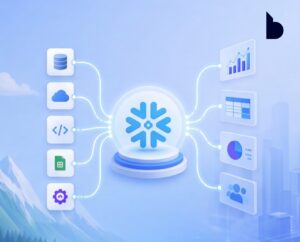
• Updated Connectors: Improved support for Vertica, Oracle, and Snowflake.
What Do These Advancements Mean?
Beyond new tools, Microsoft is redefining the concept of self-service data analytics.
Thanks to AI integration, many manual tasks are now automated, allowing users to focus on strategic analysis and informed decision-making.
Collaboration between technical and business profiles is smoother, and the platforms are evolving into more intuitive, connected, and efficient environments.
Conclusion: The Future Is Now
Waiting for these technologies to “mature” could mean falling behind.
Microsoft is building a smarter, more collaborative, and more powerful data ecosystem—and those who adopt these innovations today will be in a stronger position to lead their organization’s digital transformation.
At Bravent, we help you explore and apply these updates to maximize the value of your data.
Would you like to learn how to integrate these solutions into your company?
📩 Request a free advisory session with our experts and transform your data strategy with Microsoft Fabric!
🔗 Visit www.bravent.com to learn more about our solutions.
For more details, you can contact us at Info@bravent.net