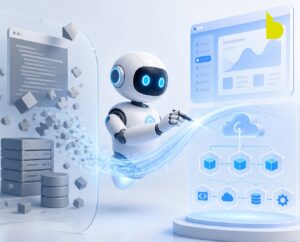
The digital twin is a virtual replica of a real asset, infrastructure or system that, through the integration of real-time data and advanced technologies such as the Internet of Things (IoT), artificial intelligence and predictive analytics, makes it possible to simulate, analyze and predict its behavior.
In the field of infrastructure, this technology is transforming the planning, construction, operation and maintenance of critical assets, enabling more informed decisions to be made, resources to be optimized and safety to be improved.
Bravent’s different participations in university activities and challenges with students promote quality education, where students not only acquire theoretical knowledge, but also have the opportunity to interact directly with state-of-the-art innovations, based on advanced technology such as generative AI, spatial computing or big data, getting involved in different programs and activities designed to facilitate their incorporation into the labor market.
Creating a digital twin
The development of a digital twin begins with the construction of a three-dimensional (3D) model of the asset or infrastructure in question. To do this, technologies such as LiDAR laser scanning and drones are used to generate detailed point clouds of the physical environment. This data is combined with additional information, such as architectural plans, field sensors and historical operating data, to form the digital model.
Depending on the use case, sometimes a two-dimensional (2D) model may be sufficient, especially when looking to analyze distribution and layout information without the need for complex volumetric simulations.
Once the digital model is established, real-time data from sensors installed in the infrastructure, such as cameras, weather stations, environmental monitoring devices and traffic control systems, are integrated. This interconnection allows the digital twin to faithfully reflect the current conditions of the physical environment and facilitate the simulation of various situations.
We can also create 2d models that depending on the use case may be sufficient.
With the digital environment we can see the position of the sensors on the highway, information points, exits, etc… it is very important to keep these environments updated, to update the models periodically, that is why we use systems that we have inside the vehicles that give us information.

Digital twin applications in infrastructure
- Traffic simulation and analysis
The use of digital twins allows modeling and predicting traffic behavior under different conditions. For example, it is possible to analyze how a construction project will impact traffic before it is executed or to predict the best time to carry out road closures based on massive events. It can also simulate different weather conditions to evaluate their effect on mobility.
- Intelligent management of critical infrastructures
Digital twins allow real-time monitoring of assets such as highways, bridges and tunnels, optimizing their maintenance and reducing operational risks. Through simulations, it is possible to predict how a structure will react to extreme conditions, such as floods or earthquakes, improving emergency response planning.
- Resource and cost optimization
With a digital twin, organizations can reduce operating costs and improve energy efficiency. By integrating real-time data, faults can be detected before they occur, enabling predictive maintenance and avoiding costly unexpected repairs. It also facilitates the optimization of lighting and air conditioning systems in tunnels or transport stations.
- Improved road safety
The use of digital twins makes it possible to evaluate the optimal placement of variable messaging panels, weather sensors and surveillance cameras. It also facilitates the simulation of risky situations, such as wrong-way driving, enabling the development of more effective detection and response systems.
- Infrastructure for autonomous and connected vehicles
To ensure the connectivity of autonomous vehicles on roads and highways, proper distribution of 5G antennas is essential. Using digital twins, it is possible to optimize their location to guarantee coverage with the least number of devices and without incurring additional costs, ensuring stable and secure communication for these vehicles.
- Design and construction validation
Before starting a construction site, a digital twin makes it possible to analyze critical aspects such as visibility at grade changes, the optimal location of traffic signs or lane distribution. This avoids costly errors and facilitates decision-making in the design phase, ensuring that the infrastructure meets safety and efficiency standards.
- Simulation of scenarios for emergency management
Digital twins make it possible to recreate traffic accidents and other events to analyze the response of safety and emergency systems. This helps to optimize reaction times and evaluate the effectiveness of evacuation or roadside assistance protocols.
Key benefits of the digital twin in infrastructure
- Better decision making: Real-time data integration enables decisions based on accurate and up-to-date information.
- Operational efficiency: Resource optimization and cost reduction in maintenance and management.
- Improved safety: Simulation of risk scenarios to strengthen preventive measures.
- Risk and error reduction: Identification of potential failures before executing projects or changes.
- Design and planning optimization: Pre-project assessment to minimize negative impacts and improve infrastructure efficiency.
Conclusion
The use of digital twins in infrastructure represents a significant change in the way physical assets are designed, managed and optimized. Its ability to simulate and predict scenarios reduces uncertainties and improves operational efficiency.
The digitization of the infrastructure sector is advancing rapidly, and the implementation of this technology will be key to improving mobility, safety and sustainability in the coming years.
For more details, you can contact us at Info@bravent.net